Real checks from multiple locations
UptimeTick runs checks from multiple locations so you can see real availability, compare regions, and reduce the noise that comes from a single checkpoint.

Website monitoring with UptimeTick helps you track availability, confirm responses, follow latency, and get alerts when a real incident starts. Monitor websites, APIs, and critical services from one place with HTTP(s) checks, keyword validation, SSL tracking, status pages, and mobile access.
Built for production websites
Track reliability for marketing sites, customer apps, and business-critical services.
Faster incident awareness
Know about outages, alerts, and performance shifts before users open a ticket.
Useful beyond up or down
Validate content, watch SSL, and follow website response monitoring in the same workflow.
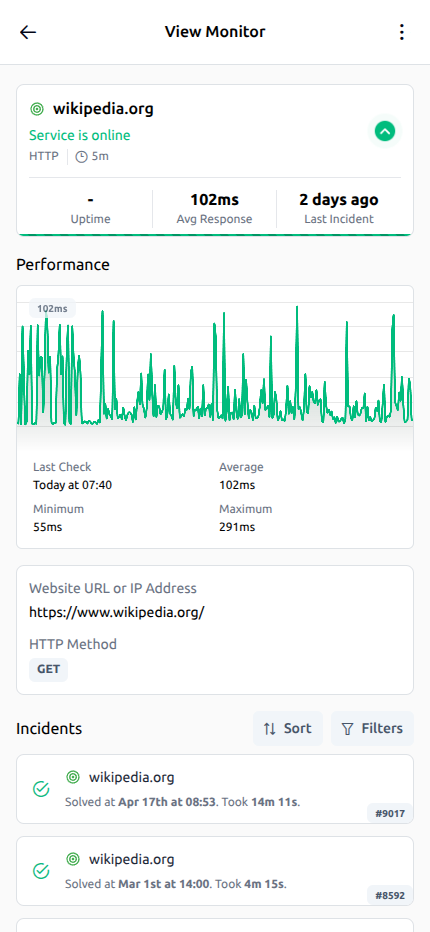
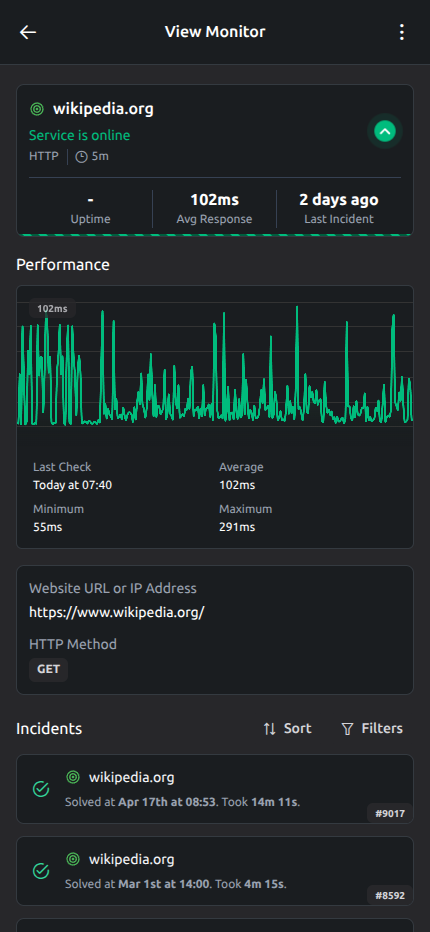
Checks, incidents, alert context, and recovery history stay in one place so your team can investigate faster.
Outage timeline
See when an incident started, how it progressed, and when service fully recovered.
Response time trends
Track performance shifts and spot slowdowns before they affect the user experience.
Alert context in one view
Checks, incident history, and critical signals stay together to speed up investigation.
A reliable website monitoring service should do more than ping one endpoint from one place. UptimeTick checks your website from multiple locations, watches for downtime, validates responses, and tracks response time so you can understand both availability and performance.
If you need a broader view across websites, APIs, and infrastructure, pair this page with full uptime monitoring.
UptimeTick runs checks from multiple locations so you can see real availability, compare regions, and reduce the noise that comes from a single checkpoint.
When a monitor fails, UptimeTick helps you verify the outage quickly so your team can move from uncertainty to response without waiting for customer reports.
Keyword monitoring confirms the page or endpoint returns the content you expect, which helps catch broken renders, fallback pages, and partial incidents.
Every check also gives you timing data, making it easier to follow latency, spot unstable performance, and act before slowdowns become a larger incident.
Downtime is not just a technical issue. It creates revenue loss, damages trust, affects search visibility, and increases the pressure on the teams responsible for keeping systems stable. The earlier you detect a problem, the better your odds of containing the impact.
Checkout failures, signup errors, and broken lead forms turn downtime into an immediate business problem. Faster detection means less time losing conversions.
Visitors remember errors and timeouts. Consistent reliability helps protect your brand, while repeated outages make customers question your service.
Search visibility depends on availability and performance. Frequent outages or slow responses can hurt crawl quality, user signals, and long-term organic growth.
Without clear alerts and incident context, support hears the problem first and engineering starts blind. Monitoring gives teams a faster, more organized response path.
UptimeTick gives teams the core checks they need to improve availability, protect reliability, and respond to incidents with less guesswork. Each capability fits into the same product instead of forcing you to piece together separate tools.
When certificate renewals and browser trust matter as much as HTTP availability, add SSL certificate monitoring.
UptimeTick gives you website uptime monitoring that fits the way modern teams work. You can monitor HTTP and HTTPS endpoints, track availability over time, and keep a clear record of every incident without adding operational overhead.
A website uptime monitor should help your team answer simple questions quickly: Is the site up, when did the outage start, and how often does the issue happen? UptimeTick keeps those answers easy to access so teams can focus on fixing the problem instead of gathering context.
Performance problems usually show up before a full outage. UptimeTick tracks response time so your team can see how a website or API behaves under normal conditions and notice when latency starts to drift in the wrong direction.
Website response monitoring gives engineers and operators a better picture of user experience. When performance degrades, you can investigate early instead of waiting for the next availability failure.
Certificate issues create avoidable outages that still catch teams off guard. UptimeTick monitors SSL certificates so you can stay ahead of expiration dates and prevent trust warnings from reaching customers.
SSL monitoring is especially useful when you manage multiple properties, client sites, or fast-moving production environments where renewals can slip through the cracks.
A 200 response does not always mean the experience works. UptimeTick lets you validate keywords in the response body so you can confirm the page contains the content, message, or marker you expect.
That makes keyword monitoring practical for detecting broken templates, maintenance pages, bad deploys, and application errors that basic uptime checks can miss.
Fast alerts are the difference between a contained incident and a prolonged outage. UptimeTick sends alerts as soon as a problem is confirmed so your team can react while the issue is still small.
Because UptimeTick includes mobile applications and status pages, your team can stay connected to incidents, communicate clearly, and reduce response time even when no one is at a desk.
Start with website uptime monitoring, then expand into SSL checks, keyword validation, heartbeat monitoring, domain expiration monitoring, status pages, and mobile alerts as your stack grows.
To avoid outages caused by ownership lapses and missed renewals, connect this workflow with domain renewal monitoring.
Start with the checks you need today and scale as your sites, alerts, and response expectations grow.
UptimeTick is designed for teams that want strong monitoring fundamentals without a heavy setup or a cluttered workflow. It gives you the checks you need, the alerts you need, and a clean way to follow incidents from first signal to resolution.
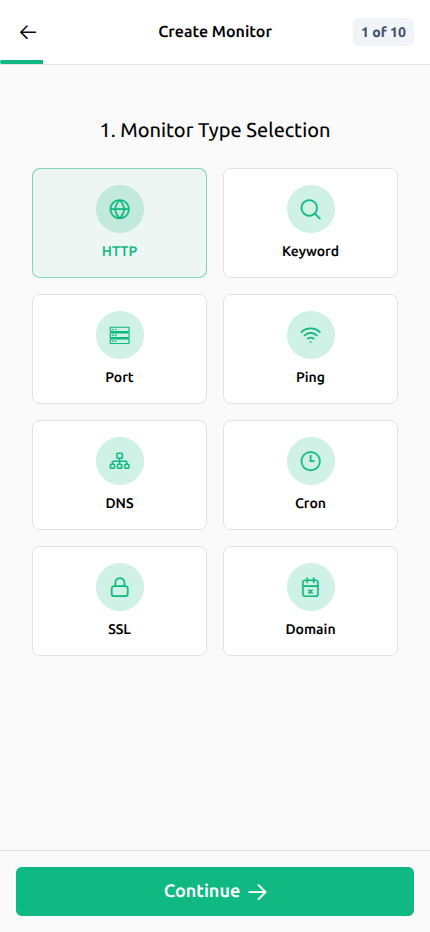
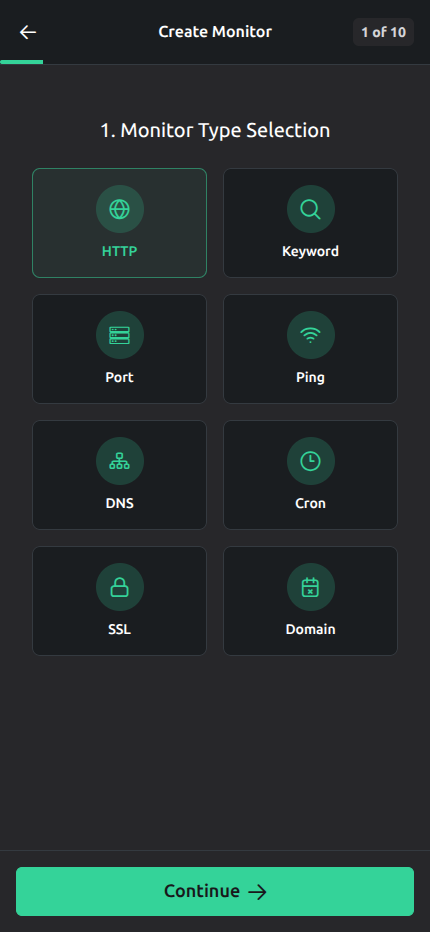
Add a URL, choose the right type of check, and start monitoring without a long onboarding project or extra infrastructure.
The dashboard keeps availability, alerts, incidents, and performance easy to scan so teams can make decisions faster during an outage.
UptimeTick focuses on delivering useful alerts quickly so teams can respond before customers, stakeholders, or support tickets reveal the problem.
With mobile apps built into the product, founders, agencies, and IT teams can monitor website status and react to incidents from anywhere.
Different teams feel outages in different ways. UptimeTick gives founders, developers, agencies, and operators a practical way to monitor website status, respond faster, and keep performance visible across the systems they own.
For machine-to-machine endpoints that need response validation beyond rendered pages, use API endpoint monitoring.
Monitor storefront availability, validate product or checkout pages, and track latency during promotions so downtime does not cut directly into revenue.
Watch landing pages, sign-in flows, customer dashboards, and supporting endpoints so reliability issues do not turn into churn or support escalation.
Keep an eye on multiple client websites, detect incidents quickly, and use status pages to communicate clearly when a customer-facing service has an outage.
Track API availability, monitor response performance, and validate expected content so backend failures do not break product workflows silently.
These answers cover the questions teams usually ask when they compare a website monitoring service or evaluate a new website uptime monitor.
Website monitoring is the process of checking whether a website, API, or service is available and working as expected. It usually covers availability, outage detection, response validation, latency, and alerts so teams can act before users report a problem.
UptimeTick helps you improve availability, shorten incident response, and keep website performance visible without adding unnecessary complexity. Set up your first check in minutes and give your team a clearer view of uptime, latency, alerts, and reliability.