Certificate monitoring is about validity and timing
A useful SSL certificate monitoring tool checks whether a certificate is still valid now and whether expiry is approaching soon.

SSL monitoring with UptimeTick helps teams track certificate validity, renewal timing, issuer details, and HTTPS trust before an expired or broken certificate turns into browser warnings, integration failures, or an avoidable outage.
Certificate expiration tracking
See when each certificate expires so renewal work happens before expiry becomes an incident.
HTTPS trust visibility
Monitor whether endpoints still present a valid certificate that browsers and clients can trust.
Fast SSL expiry alerts
Notify the right team early when renewal timing starts to create risk.
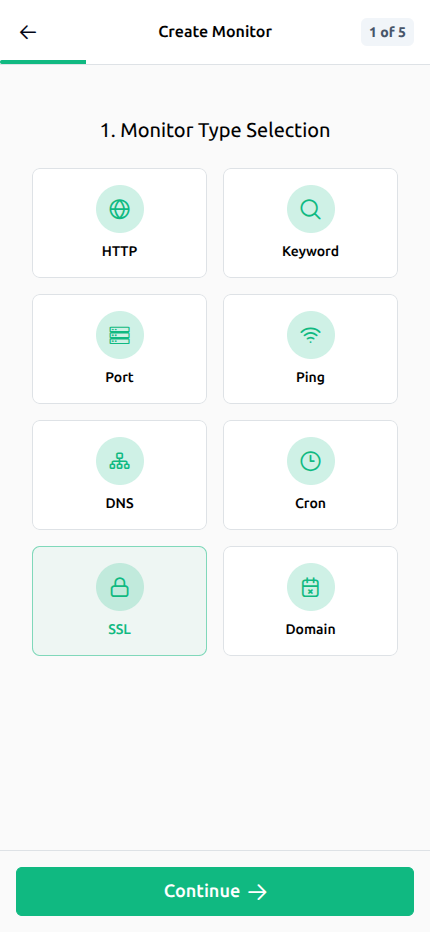
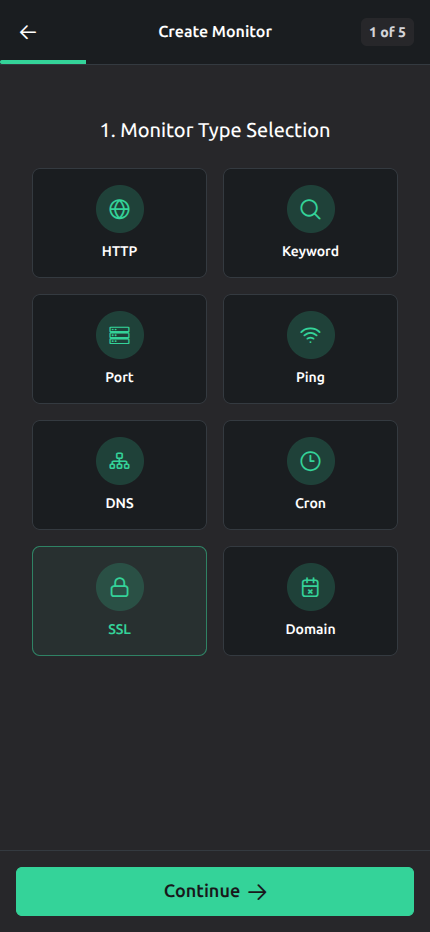
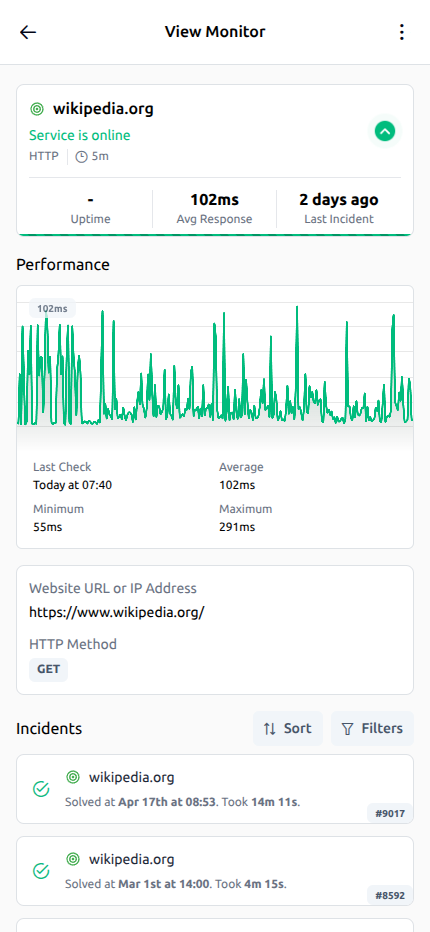
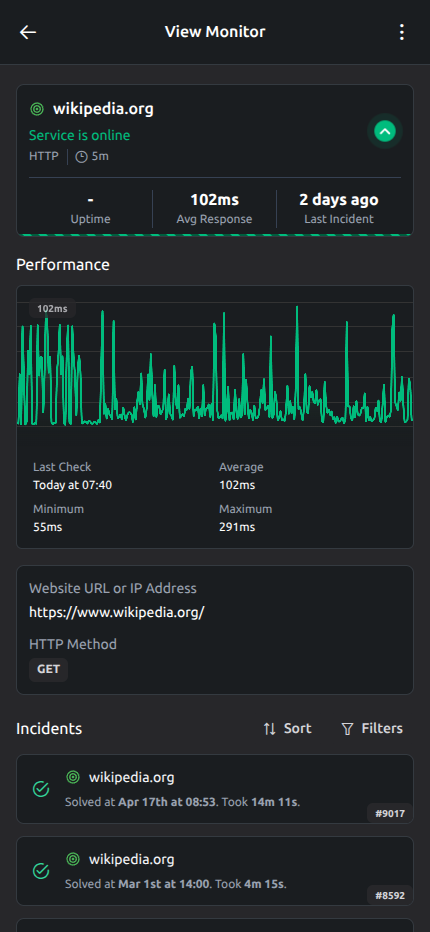
Checks, incidents, alert context, and recovery history stay in one place so your team can investigate faster.
Outage timeline
See when an incident started, how it progressed, and when service fully recovered.
Response time trends
Track performance shifts and spot slowdowns before they affect the user experience.
Alert context in one view
Checks, incident history, and critical signals stay together to speed up investigation.
SSL monitoring is the process of checking a certificate on a website or API endpoint to confirm that it is still valid, trusted, and not approaching expiration unnoticed. In simple terms, an SSL monitor helps your team keep track of certificate health so HTTPS remains usable for browsers, applications, and automated clients.
That matters because certificates fail more often than teams expect. Renewal automation can break, a new certificate can be issued with the wrong hostname, an intermediate chain can be misconfigured, or a team can simply miss the expiry date during a busy release cycle. When that happens, the result is not just a technical warning. It can trigger browser trust errors, break API clients, interrupt logins or checkouts, and create a public incident that was preventable.
Because certificate failures often become availability incidents, this topic fits naturally inside broader uptime monitoring.
A useful SSL certificate monitoring tool checks whether a certificate is still valid now and whether expiry is approaching soon.
Knowing the exact expiry window gives teams time to renew before customers encounter trust warnings or failed connections.
Renewal errors, hostname mistakes, and trust-chain problems can all surface unexpectedly even when infrastructure looks healthy.
In production, SSL certificate monitoring should give teams a clear view of certificate health without requiring manual browser checks or last-minute audits. That means validating the certificate presented by an HTTPS endpoint, tracking the expiry date, surfacing issuer details, and sending alerts before renewal timing becomes risky.
UptimeTick checks whether the HTTPS endpoint presents a valid certificate that is still within its usable TLS validity window.
The monitor follows the certificate expiry date so teams can plan renewal work before service trust is affected.
Seeing issuer information helps teams confirm which certificate authority issued the cert and whether the expected replacement is live.
When renewal deadlines approach, UptimeTick sends alerts early enough for teams to act before browser warnings or service interruptions appear.
A reliable SSL monitor should catch more than a certificate that already expired. Many trust problems begin earlier as configuration errors, delayed renewals, or certificate mismatches that quietly increase operational risk.
Certificate expiration is the most obvious SSL failure mode, but the real risk starts before the actual deadline. Once renewal timing slips too close to expiry, teams lose margin for validation, deployment, rollback, and coordination across environments.
Certificate expiration monitoring keeps that timeline visible so teams do not discover the problem only after a browser or client refuses the connection.
A certificate can look correct on the surface and still fail because the chain presented to clients is incomplete or invalid. This often happens during migrations, certificate replacements, or load balancer changes.
When the chain is wrong, browsers and API clients may reject the endpoint even though the service itself is still running.
Hostname mismatch issues appear when the certificate does not actually cover the domain or subdomain serving traffic. This can happen when the wrong certificate is deployed to an environment, wildcard assumptions are incorrect, or SAN coverage is incomplete.
These errors are easy to miss in internal testing and painful to discover in production because the endpoint is up, but the presented certificate is still wrong.
Many certificate incidents are not caused by the certificate authority itself. They happen because internal renewal workflows stall. DNS validation may lag, approval may be delayed, automation jobs may fail, or the renewed certificate may never reach production.
Tracking renewal timing gives teams enough visibility to escalate before a routine certificate task turns into a public outage.
When HTTPS trust fails, the business impact is immediate. Browsers show warnings, API clients reject connections, integrations can stop, and customer confidence drops quickly because the site or service looks unsafe.
SSL monitoring helps teams catch the warning signs before the trust failure reaches users, partners, or search engines.
Pick a plan that fits the number of domains, certificates, and renewal risks you need to stay ahead of.
Strong SSL certificate monitoring should help teams see certificate health clearly, act before renewal deadlines, and keep HTTPS trust visible from one operational workflow.
Renewal risk often starts with the asset itself, so certificate workflows pair well with domain expiry monitoring.
Expiry alerts are the core of certificate expiration monitoring. Teams need enough lead time to renew, deploy, and verify the replacement certificate before users ever see a trust problem.
UptimeTick sends SSL expiry alerts early so certificate issues are managed like a planned maintenance task instead of a surprise incident.
A reminder is more than a calendar nudge when it is tied to real certificate data. Renewal reminders keep upcoming work visible and help teams coordinate ownership before the deadline becomes urgent.
That is especially useful in environments with multiple domains, client-managed assets, or shared operational responsibility between product, engineering, and agencies.
SSL monitoring should connect certificate data to the real HTTPS endpoints serving traffic. That way teams can see which live services are at risk instead of reviewing certificates as disconnected inventory.
This makes it easier to understand business impact when a cert is nearing expiry or when a deployment introduces an unexpected trust problem.
Some teams manage certificates across many domains, subdomains, and customer-facing properties. Domain certificate checks help keep that footprint visible so important assets do not slip through unmanaged.
Used together with domain monitoring and HTTP(s) checks, SSL monitoring becomes part of a broader operational picture instead of an isolated checklist.
Certificate incidents do not always happen during office hours, and renewal deadlines do not always align with team availability. Mobile alert delivery keeps SSL monitoring actionable when responders are away from their desks.
UptimeTick helps teams review certificate status, expiry risk, and active incidents from mobile devices so trust issues do not wait for the next login to be seen.
Certificate problems do more than create a technical error. They create visible trust failures that customers, browsers, crawlers, and automated clients react to immediately.
SSL monitoring helps teams renew and verify certificates before browsers begin showing security warnings to visitors.
Certificate failures can block sites, APIs, dashboards, and integrations even when the underlying infrastructure is still running.
A trust warning changes how users perceive your service instantly, especially on login, payment, and account pages.
Broken HTTPS trust can affect crawl reliability, user behavior, and overall site confidence when certificate issues remain unresolved.
UptimeTick gives teams a straightforward SSL monitoring workflow with practical visibility into expiry, trust, and certificate health. You can set up checks quickly, receive early alerts, review history, and stay aware from desktop or mobile.
Create an SSL monitor in minutes and pair it with HTTP(s), domain, keyword, port, and other checks in the same platform.
Get notified before certificate expiry, renewal delays, or trust issues become customer-facing incidents.
Review past certificate events and trust-related incidents so recurring operational issues are easier to explain and fix.
Use UptimeTick mobile apps to review certificate status and active alerts when you are away from your main dashboard.
SSL monitoring matters anywhere HTTPS trust is part of the customer, application, or integration experience. The goal is to keep certificate validity visible before trust problems become outages.
For browser-facing pages and rendered user journeys, pair certificate checks with website monitoring.
For machine clients, webhooks, and backend traffic, connect this with API monitoring.
Monitor marketing sites, product sites, and customer-facing pages where browser warnings can immediately damage trust and conversion.
Track certificates on API endpoints so TLS validity problems do not break integrations, mobile apps, or partner traffic without warning.
Protect login flows, account pages, and admin surfaces where certificate failures create immediate trust and access issues.
Watch storefront, checkout, and account domains where HTTPS failures can disrupt revenue and create visible security concerns fast.
Clear answers for teams evaluating SSL certificate monitoring and certificate expiration monitoring tools.
SSL monitoring is the process of checking whether a certificate on an HTTPS endpoint is still valid, trusted, and not approaching expiry without notice.